AI Data Retention Depends on the Endpoint and API Design
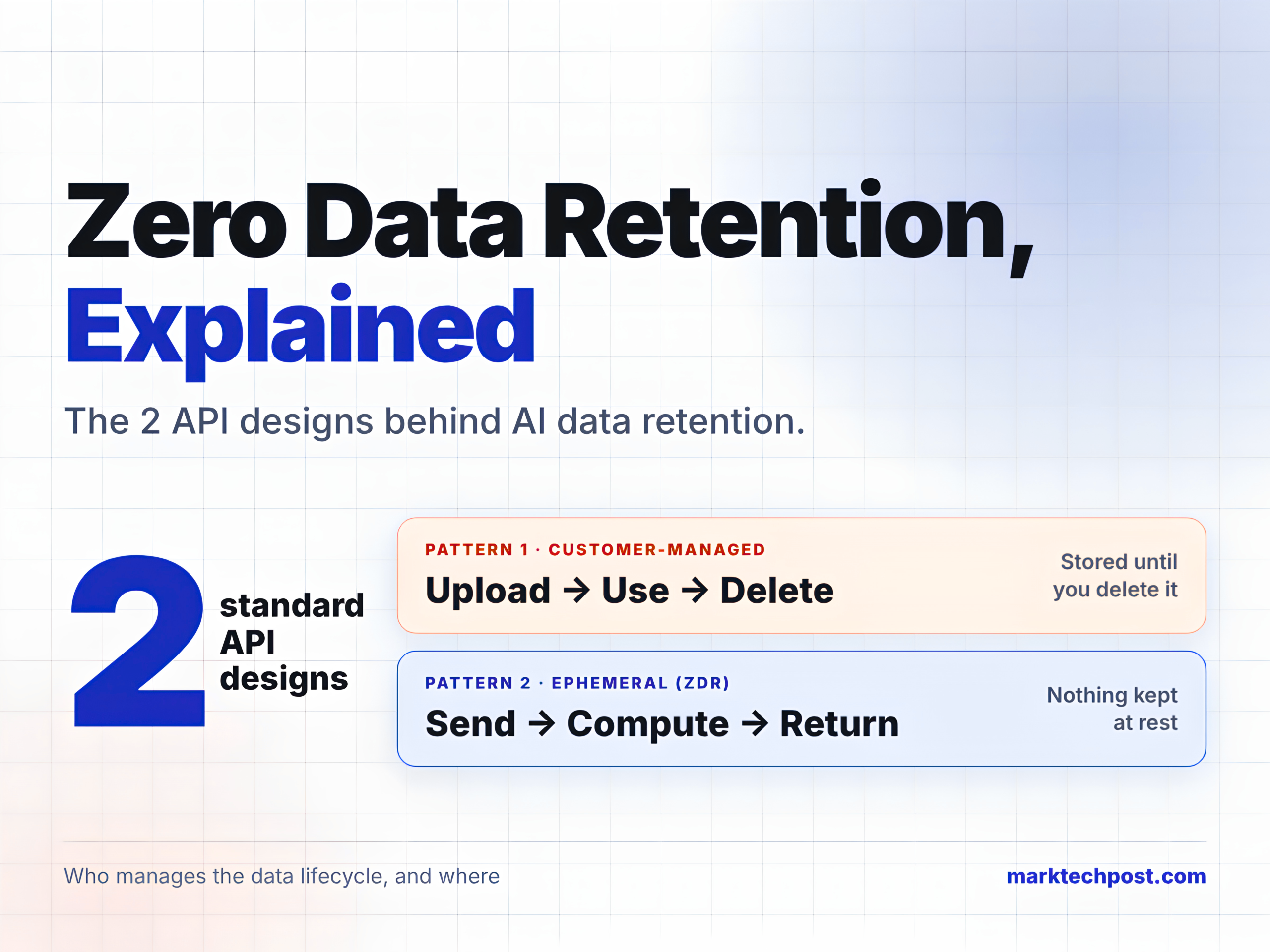
AI data retention generally follows one of two API patterns. In customer-managed retention, a developer uploads a file or dataset, uses it for jobs, and deletes it through the platform. The service keeps the material available until deletion or a documented expiry. Batch processing is the standard example: OpenAI, Amazon Bedrock, Gemini and Fireworks AI offer workflows based on uploaded inputs or datasets.
In ephemeral processing, the application sends data, the platform computes a response and returns it without retaining application state. This is the model associated with zero data retention (ZDR), but ZDR is an endpoint-level commitment, not a guarantee covering an entire vendor. Eligibility can depend on request parameters, account settings and prior approval. Some services still retain abuse-monitoring logs, while cached or stored features may follow separate rules.
The article advises developers to map every endpoint to one of the two patterns, check settings such as store, and avoid assuming that data expires automatically. For each upload, they should identify the deletion process and any stated retention period. Ephemeral processing reduces the number of copies requiring protection, but stored datasets remain necessary for workflows such as batch jobs and training.
Written by Sakhanda Wire AI from reporting by MarkTechPost. Facts, quotes and full context are in the original article below.