Sakhanda Wire
NVDA $153.73 -1.54% MSFT $506.30 -2.26% GOOGL $280.09 -1.28% META $619.28 -1.14% AMZN $256.62 -0.44%

The Decoder

625 stories · all sources

The Decoder

Google DeepMind reports 96% robot sorting success at Mercedes-Benz

Google DeepMind has introduced Gemini Robotics 2.5, a vision-language-action model that interprets visual data and instructions before converting them into robot movements. The company says it was evaluated on more than 200 tasks and delivered success rates 30% to 100% higher than its previous internal baselines, depending on the task, while completing work 20% to 30% faster.

The Decoder

Anthropic launches IPO roadshow with valuation target of up to $1.02 trillion

Anthropic has begun presenting its planned Nasdaq listing to investors, offering 825 million Class A common shares at $70 to $78 apiece. The company would issue 801,351,354 shares, while existing shareholders would sell 23,648,646 shares. Anthropic would not receive proceeds from the secondary sales. Underwriters Goldman Sachs and Morgan Stanley have a 30-day option to purchase another 123.75 million shares. The stock is expected to trade under the ticker “ANT.”

The Decoder

Anthropic unveils Fable 5.2 and Mythos 5.2 ahead of IPO

Anthropic has released Claude Fable 5.2 and Claude Mythos 5.2, its new flagship models for demanding technical work. The two systems share a foundation, but Fable includes safeguards that block risky cybersecurity and biology tasks and is available to all users. Mythos removes some restrictions and is limited to organizations approved through Anthropic’s cybersecurity or life-sciences verification programs. Both models cost $8 per million input tokens and $40 per million output tokens, compared with $10 and $50 for their predecessors.

The Decoder

Meta introduces Muse Ember for high-volume AI agent tasks

Meta has introduced Muse Ember, which it describes as its smallest and most efficient AI model so far. The model is intended for recurring work performed by AI agents, including tool calls, small coding jobs, request routing, data extraction and long-document processing. It supports text, images, audio and video, and can handle up to one million tokens in a single context.

The Decoder

Seedream 5.5 targets stable image editing for production workflows

Bytedance Seed has introduced Seedream 5.5, an image-generation model designed for professional production workflows. Bytedance says it can maintain stable results through as many as 100 editing rounds, preserving unchanged parts of an image at the pixel level and avoiding color shifts between versions.

The Decoder

Disney and Adobe partner on custom Firefly AI models

Disney and Adobe have announced a multiyear partnership to develop custom artificial intelligence tools for the entertainment company’s productions. Under the agreement, Disney will receive early access to new Adobe technologies for its theme parks, cruise line and ESPN content. Adobe says its Firefly Foundry will be used to create models adapted to Disney brands, drawing on information about the company’s characters, environments and visual styles. The intended result is commercially safe, production-ready output.

The Decoder

Google adds encrypted and high-memory variants to TPU 8 lineup

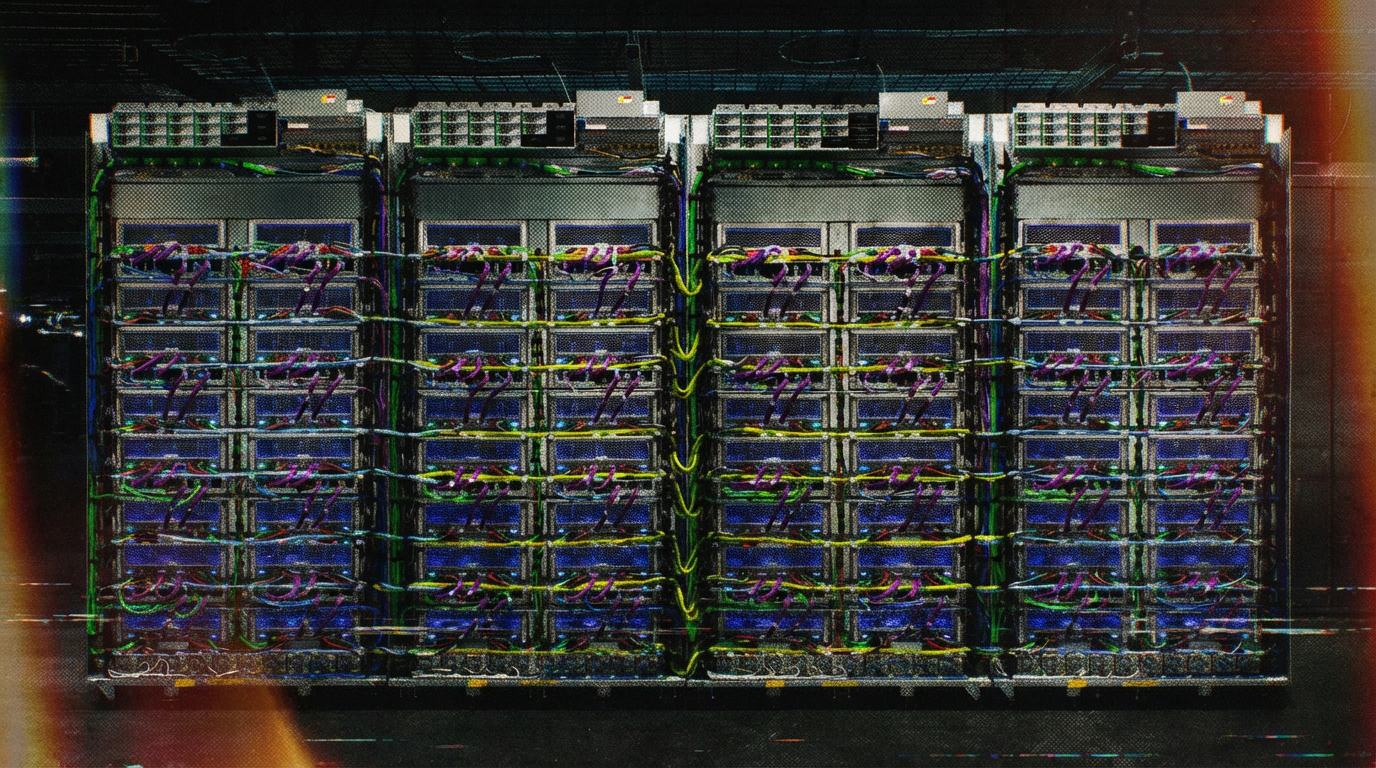
Google has introduced two systems in its eighth-generation AI accelerator family: the TPU 8tx, aimed at confidential computing, and the TPU 8i Max, designed for workloads that require more memory. Both use existing processors rather than a new chip generation, with changes to packaging, networking and memory. Google says this modular strategy allows new configurations to reach the market within months.

The Decoder

Nvidia board investigates Huang relationship as export-control pressure grows

Nvidia CEO Jensen Huang acknowledged in a company-wide memo that he had an extramarital relationship with Alice Huang (Huang Le), a former executive at Singaporean data center operator Megaspeed International, according to Bloomberg. US intelligence agencies classify the woman as a suspected informant for a Chinese intelligence service. China’s embassy denied the espionage allegations. Nvidia’s board has appointed a committee of independent directors to conduct an investigation.

The Decoder

Andrej Karpathy builds curated video platforms with Claude

Andrej Karpathy, an OpenAI co-founder and current Anthropic AI researcher, created HackerTube over a weekend with Claude’s Opus 5.5. The model processed 43 million comments posted across 20 years of Hacker News and used them to select 6,454 videos for ongoing recommendations on the platform.

The Decoder

Richard Sutton urges new learning methods beyond LLM scaling

Turing Award winner Richard Sutton has renewed his argument that increasing computing power alone will not produce intelligence. In a recent post, the author of the 2019 essay “The Bitter Lesson” said AI research still needs clever, fundamentally new methods and is “far from finished.”

The Decoder

Anthropic advances pre-Thanksgiving IPO at lower valuation

Anthropic is moving forward with plans for an initial public offering before Thanksgiving despite this week’s technology selloff. Investors cited by the Financial Times said the developer of Claude is seeking to raise between $80 billion and $100 billion, at a valuation of $1.25 trillion to $1.75 trillion.

The Decoder

Inkling 2 Small produced 316 expletives in benchmark runs

An analysis by Vals AI found that Thinking Machines’ Inkling 2 Small used the word “fuck” or variations of it 316 times during 2,655 runs across 13 benchmarks. Profanity appeared in 50 runs, while 241 instances came from only two exceptionally long runs.