Sakhanda Wire
NVDA $155.46 -0.44% MSFT $506.24 -2.27% GOOGL $280.20 -1.24% META $618.87 -1.20% AMZN $257.89 +0.05%

Latest news

Older stories

The Verge

AI companies turn to software agents before dedicated hardware

Artificial intelligence has become common on phones and computers, but dedicated AI devices have so far struggled to gain acceptance. Over the next year, Meta and OpenAI are expected to continue efforts to bring AI into purpose-built hardware, despite the difficulties faced by earlier products.

TechCrunch

Reddit to end RSS feeds and public API access

Reddit plans to discontinue support for RSS feeds on November 13, saying the format has become a common channel for large-scale scraping and automated abuse. RSS provides website updates in a standardized feed that users and applications can follow, and has long been associated with the open web.

TechCrunch

Consumer AI faces financial limits despite stronger products

Consumer AI is showing signs of renewed momentum. Meta’s personal assistant Muse and its plush-like mascot Jolly have reportedly attracted unexpected interest, while OpenAI’s Dots follows a similar cartoon-style assistant concept. The Instinct assistant has reached a $10 billion valuation, supported by features for booking travel, making restaurant reservations and cancelling subscriptions. These products reflect growing confidence that agentic AI can handle routine tasks reliably enough to deliver value to consumers.

The Decoder

Meta claims AI data centers qualify for billions in tax credits

Meta is using the US federal research tax credit for its artificial-intelligence infrastructure, classifying data centers as “pilot models” and Nvidia chips as experimental materials, according to a report cited by The New York Times. The company’s claimed savings reached $3.9 billion in 2025, compared with $2 billion in 2024 and $700 million in 2023. That made Meta the largest beneficiary of the credit among publicly traded companies.

The Verge

Trump reframes AI safety stance after meal with technology leaders

President Donald Trump discussed his latest position on artificial intelligence after hosting a meal with Big Tech leaders on Tuesday. In response to journalists’ questions, he revisited earlier comments in which he described fears about AI safety as a “hoax” created by Democrats.

TechCrunch

Meta denies Muse accessed private messages without permission

Meta is disputing journalist Jason Aten’s account that its Muse AI agent read his private Messages content without authorization. Andy Stone, Meta’s vice president of communications, said on X that the Messages integration in the Muse app for Mac is optional and requires users to enable both Full Disk Access and the Messages connector. According to Stone, Muse cannot read Messages content unless those permissions are granted.

The Decoder

FTC Opens Consumer Protection Investigation Into OpenAI and Other AI Labs

The U.S. Federal Trade Commission is investigating OpenAI, Anthropic and other leading artificial-intelligence laboratories over possible violations of consumer-protection rules, according to government sources. FTC Chair Andrew Ferguson is expected to seek documents and testimony from company executives through legally binding Civil Investigative Demands. The orders could be issued within weeks, the New York Post reported.

Ars Technica

Google’s AI publisher payment pilot draws skepticism

Google is testing a program that pays websites when their material makes a significant contribution to Gemini-powered search features such as AI Overviews. The experiment comes as the company’s move toward AI-generated search answers changes how publishers receive traffic from the world’s largest search engine.

TechCrunch

DoorDash launches AI agent for food orders via Apple Messages

DoorDash has introduced an AI agent that allows customers to order food through Apple Messages. Users can send requests such as “order my usual,” which the agent can interpret as a recurring Friday night order. They can also name a particular dish or ask for a recommendation from nearby restaurants.

TechCrunch

Destro raises $8 million to coordinate robots and workers in warehouses

Destro has emerged from stealth with an $8 million seed round for an AI layer that coordinates robots, warehouse equipment and human workers. Rather than manufacture robots, the startup provides software designed to manage logistics operations, including instructions for people working alongside machines. Founder Manthan Pawar said the company focuses on customer problems and expects to be cash-flow positive by the end of the year.

TechCrunch

Instinct’s curated recommendations draw complaints from some users

AI startup Instinct has introduced Instinct Selections, a feature offering curated recommendations in areas including dining, travel and shopping. Founder Noah Shinn said the company plans to work with local chefs, designers, architects and travel guides to add “human taste” to suggestions generated by the agent. Instinct has not identified its partners.

Ars Technica

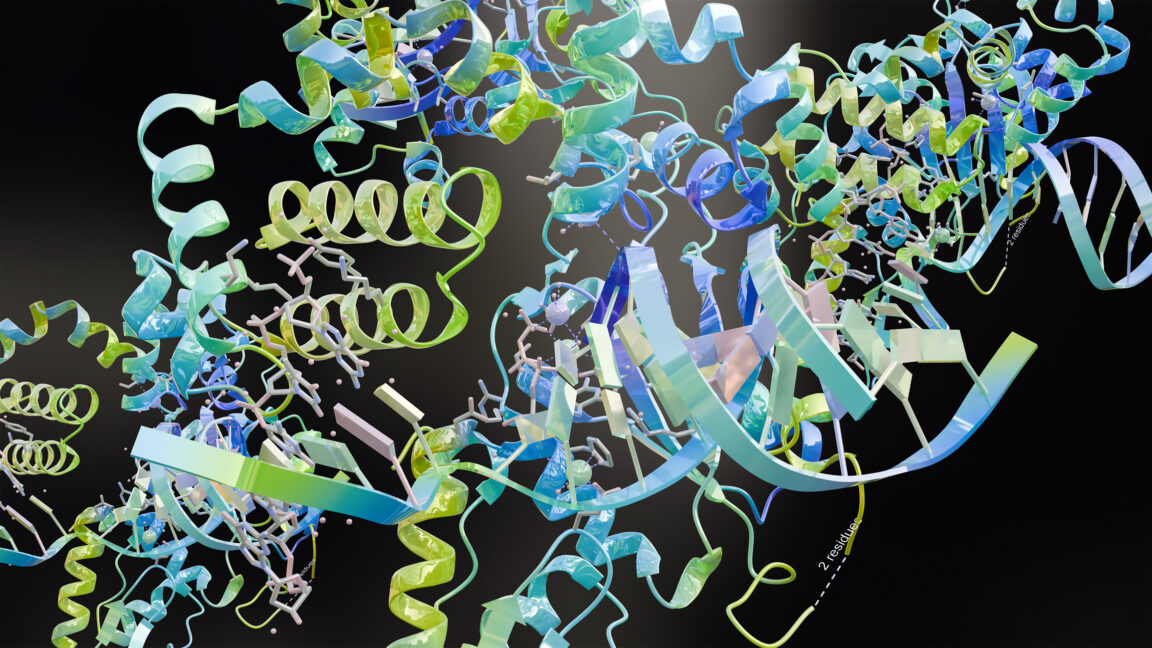
Google develops a watermark for AI-designed proteins

Google has developed a way to watermark proteins created with artificial intelligence, in a step aimed at supporting biosecurity. The method is designed to work with a popular AI protein design tool, according to the report. The approach addresses a growing concern around the use of generative systems in biological research.