Sakhanda Wire
NVDA $151.87 -2.31% MSFT $502.90 -0.66% GOOGL $280.73 +0.19% META $611.81 -1.14% AMZN $263.45 +2.16%

Latest news

Older stories

TechCrunch

Five Disrupt sessions will examine AI safety and security

TechCrunch Disrupt 2026 will feature five sessions focused on the safety, security and reliability challenges that arise as AI moves into enterprise software, vehicles, robots and autonomous agents. The sessions are scheduled across the AI Stage and Real World AI Stage during the event, set for October 13–15 at Moscone West in San Francisco.
TechCrunch

Stretch 4 robot to demonstrate home assistance at TechCrunch Disrupt 2026

Hello Robot CEO and co-founder Aaron Edsinger is scheduled to demonstrate the company’s Stretch 4 robot at TechCrunch Disrupt 2026. The session, titled “Come, Meet Stretch. The Robot Built for Real Life, Not a Demo Reel,” will take place on the Real World AI Stage and focus on robots operating alongside people.

TechCrunch

Exhibitor bookings reopen for TechCrunch Disrupt 2026

Exhibitor bookings for TechCrunch Disrupt 2026 have reopened for one final week. Startups can reserve an exhibit table until September 30 at 11:59 p.m. PT, with places available on a first-come, first-served basis. The event will take place October 13–15 at Moscone West in San Francisco and is expected to bring together more than 10,000 founders, investors, operators and technology leaders.

TechCrunch

Disrupt 2026 highlights cross-industry perspectives before ticket deadline

TechCrunch Disrupt 2026 will take place at Moscone West in San Francisco from October 13 to 15. The event’s second featured reason to attend is the opportunity to examine technology shifts from multiple perspectives, as decisions about products, investment, hiring and markets can change over time.

MIT Tech Review

Investigation finds deadly failures in US virtual border wall

Over the past 25 years, the United States has spent billions of dollars on surveillance towers along its southern border. The system was presented as a “virtual wall” that would help authorities detect and apprehend people crossing the border, while also helping save lives in remote areas.

Ars Technica

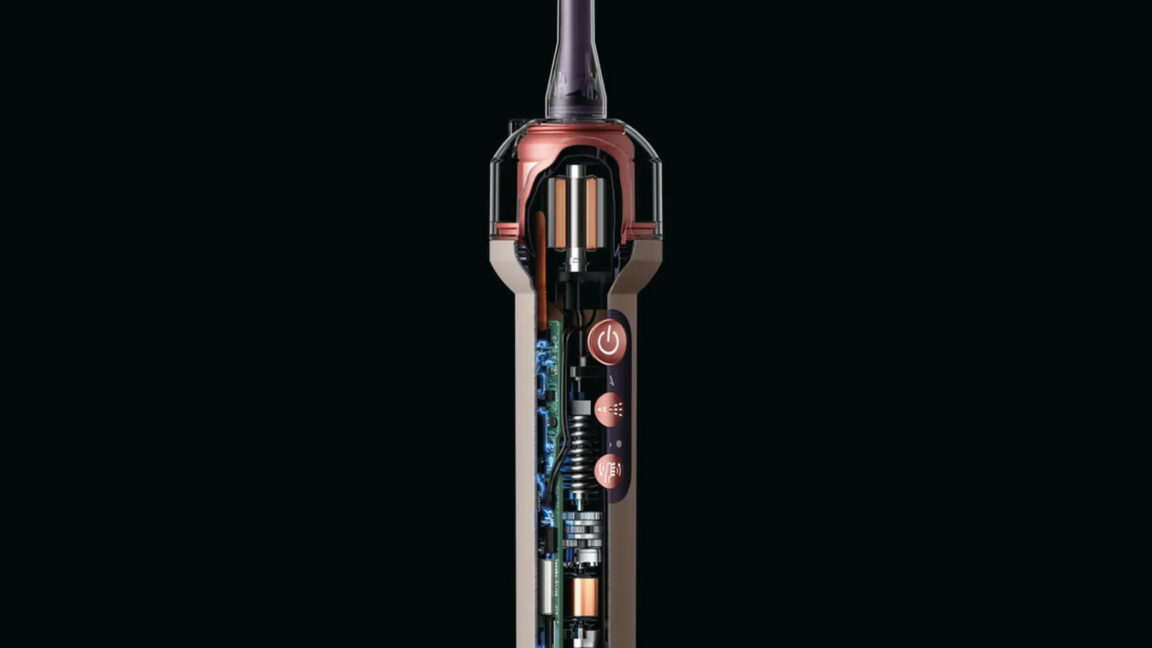
Dyson acknowledges a component issue with its $499 CameraJet toothbrush

Dyson has acknowledged a problem involving a component in its $499 CameraJet electric toothbrush, but has not identified the part that may be failing. The limited disclosure has raised questions about how the device withstands exposure to water, an essential consideration for a product designed for use while rinsing and brushing.

TechCrunch

Pennsylvania residents voice varied concerns over AI data center projects

A Data & Society report examines why opposition to data center construction has grown in Pennsylvania. The study draws on 18 months of fieldwork and interviews with 44 residents conducted between 2024 and 2026. Rather than measuring the projects’ concrete effects, the researchers studied how people experience and interpret the public debate around them.

TechCrunch

Nscale IPO to test investor appetite for concentrated AI exposure

British neocloud Nscale is preparing an IPO that will put investor interest in concentrated artificial intelligence infrastructure businesses under scrutiny. The company says in its filing that it has accumulated more than $103 billion in contracts since being separated from Australian cryptocurrency mining company Arkon Energy two years ago. About 85% of that total is linked to two customers: a $43.8 billion agreement to provide Microsoft with computing capacity through 2033 and an $44.6 billion agreement with Anthropic.

The Verge

Meta patches Muse flaw that could expose AI agent accounts

Meta has released a patch for its Muse macOS app after security researcher Patrick Wardle identified a zero-day vulnerability. The flaw required an attacker to have local access to the user’s device, but it could potentially allow control of the Muse AI agent and access to the associated Muse account.

The Decoder

Xiaomi’s MiMo-V2.6-Pro tops open-model rankings at low cost

Xiaomi says its new MiMo-V2.6 lineup has reached the highest performance among openly available AI models. The flagship MiMo-V2.6-Pro received 46 points on Artificial Analysis’s Intelligence Index, ahead of models including Kimi K3 and Qwen. Its listed price is $0.435 per million input tokens and $0.87 per million output tokens, with an estimated cost of about $0.13 for one test task. The model uses a mixture-of-experts design with 1.02 trillion parameters, of which 42 billion are active for each request.

AI News

AutoScheduler launches builder for custom warehouse applications

AutoScheduler has released a warehouse app builder that allows logistics teams to create tools from live facility data. The module is part of the company’s Warehouse AI Platform, which supports distribution centres managing inventory, equipment and labour. It is intended to address operational gaps left between large enterprise resource planning and warehouse management systems, where sites often rely on spreadsheets or informal procedures.

The Decoder

OpenAI says internal model solved more than 100 longstanding math problems

OpenAI says an internal model solved more than 100 longstanding problems across most areas of mathematics after training began on August 28. The company also attributes to it work on the Navier–Stokes Millennium Problem and reportedly the Hodge conjecture, another Millennium Prize Problem. OpenAI has not disclosed which problems were solved in detail, how the model produced the results, or what they mean for mathematics and science. The Navier–Stokes result has already prompted debate among researchers.