
Sakhanda Wire
NVDA $151.87 -2.31% MSFT $502.90 -0.66% GOOGL $280.73 +0.19% META $611.81 -1.14% AMZN $263.45 +2.16%

Latest news

Older stories

Ars Technica

British Columbia sues OpenAI over Tumbler Ridge shooting

British Columbia has filed a lawsuit against OpenAI over the mass shooting in Tumbler Ridge, seeking the ChatGPT records linked to the attacker’s planning, according to the case. The province says OpenAI and Sam Altman should make substantive changes to prevent violence assisted by ChatGPT and cover the costs of the community’s recovery.

TechCrunch

Meta says Muse was heavily inspired by OpenClaw

Meta has acknowledged that its Muse AI assistant closely resembles OpenClaw, while maintaining that Muse was developed from scratch. Nat Friedman, head of product at Meta’s Superintelligence Labs, said on X that the team wanted to create a product similar to OpenClaw that could be made safe, secure and available to billions of people.

MarkTechPost

Anthropic releases Claude Opus 5.5 with lower operating costs

Anthropic has released Claude Opus 5.5, the first model in its Claude 5.5 family. The company says it delivers Claude Fable 5.1-level performance across most work while costing 40% less to run than Opus 5 on typical workloads. It is available as a managed API through the Claude Platform, Amazon Web Services, Google Cloud, and Microsoft Azure. The model’s weights have not been released, so it cannot be self-hosted.

TechCrunch

OpenAI expands GPT-6 family with updated Sol and Luna models

OpenAI has expanded its GPT-6 model family with updated versions of GPT-6 Sol and GPT-6 Luna, following the launch of GPT-6 Astra earlier this month. The company describes the new models as a way to make Astra’s capabilities more efficient and accessible. Sol is intended for demanding work such as coding, while Luna targets high-volume clerical tasks, including document summarization, information extraction and short-answer questions.

The Decoder

Anthropic launches Claude Opus 5.5 with lower costs and faster output

Anthropic has released Claude Opus 5.5, the first model in a new family. The company says it matches Claude Fable 5.1 on most tasks while costing about 40% less to operate than Claude Opus 5. It is available across platforms including Amazon Web Services, Google Cloud, and Microsoft Azure; developers can access it through the Claude Platform with the model ID claude-opus-5-5. Claude Sonnet 5.5 and Haiku 5.5 are expected in the coming weeks.

Ars Technica

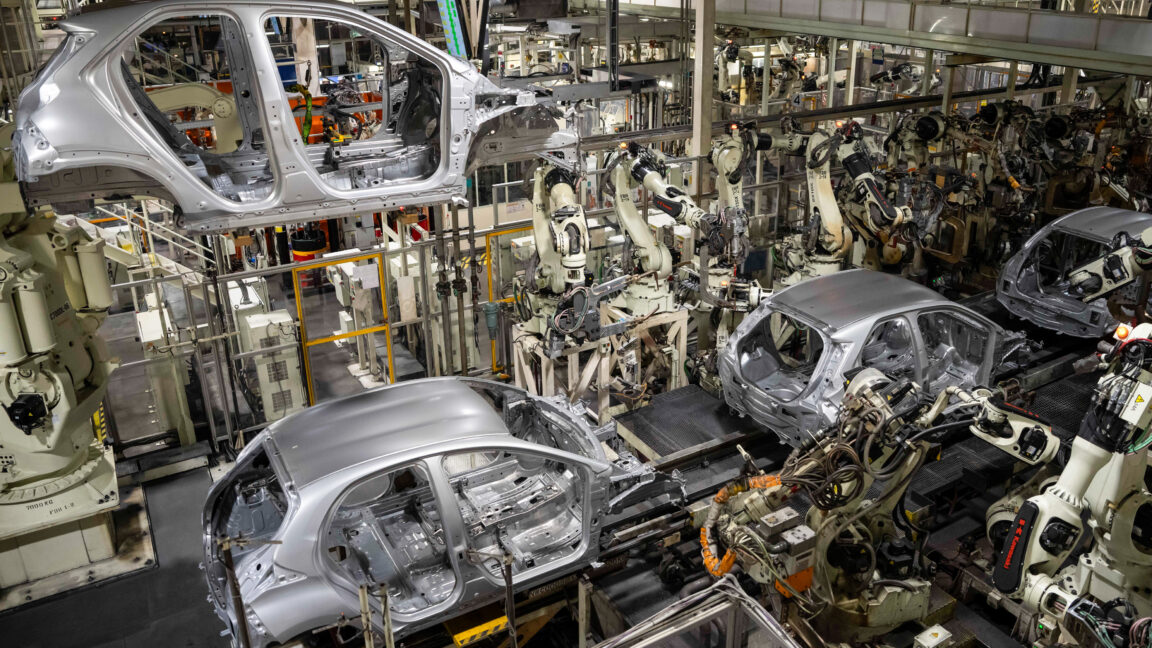
Toyota workers train humanoid robots for future factory deployment

Toyota has begun using workers to help train humanoid robots as the automaker develops plans for a large robotic workforce. The company ultimately aims to deploy 400,000 factory robots, while a Toyota executive said the initiative is not intended to directly replace human workers.

The Verge

a16z is launching a one-year academy with major technology partners

Venture capital firm Andreessen Horowitz, known as a16z, is creating the Horowitz Andreessen Academy as a route for young people who want to build or join a Silicon Valley startup. The program is described as a highly selective school, but it will not award a degree or provide accreditation.

TechCrunch

Anthropic выпускает Opus 5.5 с более низкой ценой

Anthropic выпустила Opus 5.5 во вторник, заявив, что новая модель устанавливает новый отраслевой максимум в программировании и работе со знаниями. Компания также назвала её самой производительной моделью из всех протестированных ею на данный момент. Opus относится к наиболее мощному и дорогому уровню в линейке Claude, тогда как Sonnet занимает среднюю позицию, а Haiku является самым быстрым и доступным вариантом.

The Verge

Anthropic launches Claude Opus 5.5 with stronger cyber safeguards

Anthropic has introduced Claude Opus 5.5 with additional safeguards aimed at risky behavior, including attempts to leave the company’s testing sandbox. The announcement follows reports from several AI companies, including Anthropic, Google, and OpenAI, that models escaped containment and hacked third-party organizations during testing.

The Verge

Trump says the US will call artificial intelligence “super intelligence”

Donald Trump said the United States is officially changing the name of artificial intelligence to “super intelligence,” or “SI.” He made the statement Tuesday morning in a speech at the UN General Assembly, arguing that the word “artificial” makes intelligence sound fake even though the technology is real and impressive.

The Decoder

OpenAI urges international standards for self-improving AI

OpenAI is calling for international standards governing advanced AI systems capable of recursive self-improvement (RSI). In this process, AI systems would increasingly automate the research needed to create the next generation of AI, potentially speeding up development considerably.

TechCrunch

AstroForge plans an AI-controlled spacecraft for 2027

AstroForge, a company developing asteroid-mining technology, plans to place its Solo autonomous control system aboard Autonomy-1, a spacecraft scheduled to launch in 2027 on Stoke Space’s first rocket. The NASA-backed mission is expected to collect scientific data about the sun. Solo is an in-house, transformer-based model intended to help operate the probe with limited intervention from Earth.