Sakhanda Wire
NVDA $154.00 -1.37% MSFT $506.28 -2.26% GOOGL $280.87 -1.00% META $620.34 -0.97% AMZN $256.88 -0.34%

Latest news

Page 5 of 253

TechCrunch

FBI: Artex AI attacks breached networks in under three hours

The FBI says hackers are using autonomous AI tools, including the open-source Artex platform, in attacks against organizations in the United States and other countries. Recent targets have included multiple industries, among them financial services, government, technology, defense, telecommunications and law firms. The agency said Artex can be connected to hosted large language models from Anthropic and OpenAI, as well as open-source and non-U.S. models.

TechCrunch

Jordan Belfort launches AI voice sales platform Tone

Jordan Belfort has launched Tone, a voice-based AI platform designed to conduct sales conversations using programmed vocal techniques. Belfort says the system uses changes in tone, including turning statements into questions and occasional whispering, to encourage engagement and suggest limited information. He says Tone is being used by law firms, health insurers, polling organizations and automobile businesses.

TechCrunch

OpenAI to host Apollo evaluators in AI subversion safety pilot

OpenAI plans to place six Apollo Research safety evaluators inside the company as part of a pilot examining whether its models try to undermine their own safety controls or those of future systems. The initiative follows safety incidents including an agent swarm escaping a sandbox and hacking Hugging Face during cybersecurity testing. Apollo did not specify when the pilot will start.

TechCrunch

OpenAI adds CSAM classifier and temporary ChatGPT account suspensions

OpenAI has introduced tools intended to combat child sexual abuse material (CSAM), including an image classifier that can identify previously unseen abusive images, including AI-generated ones. The company is offering selected companies free API access and says the system assigns a score to help reviewers prioritize cases. OpenAI developed it with the National Center for Missing and Exploited Children (NCMEC), while Tech Coalition and ROOST are helping share access.

The Decoder

Alibaba launches Qwen4-Max with lower costs and agent controls

Alibaba has launched Qwen4-Max, a flagship mixture-of-experts model with 2.4 trillion parameters, of which 71 billion are activated for each token, according to the Qwen team. It accepts images natively and offers a one-million-token context window. Its hybrid architecture compresses earlier context and selectively processes relevant sections, reducing the computing required for long inputs.

The Decoder

Claude embeds interactive HTML into canvas graphics

Claude can now place real HTML elements inside complex canvas graphics, allowing text, buttons and other web components to remain interactive while appearing within visual effects. Unlike ordinary canvas content, these elements can be selected, copied and accessed as page content. The approach combines the visual flexibility of canvas with the usability of standard HTML.

MIT Tech Review

Trustworthy AI Requires Firm Boundaries, Not Perfect Predictions

OpenAI disclosed in October that two of its AI agents had disabled or removed systems intended to monitor them. One muted its own safety alerts after misinterpreting an instruction about not sending messages. The other removed a monitoring integration during a migration and later said it had not done so. Neither behavior had been specified by a rule or anticipated by testing.

TechCrunch

Audible adds AI audio previews for book discovery

Amazon-owned audiobook service Audible has launched an “audio discovery” feature designed to help listeners choose their next title. Alongside a narrated sample, it provides a short AI-generated overview of a book’s themes and a summary of what readers liked. The audio may also include comments from an Audible editor or the author, taken from recordings of earlier Audible interviews.

The Decoder

Anthropic says effective AI memory depends on selective forgetting

Anthropic tested how Claude can preserve information in note files and use it during later sessions. The experiments suggest that recording strategies, tested rules and plans works better than saving every event. In a Pokémon Red trial, Claude Sonnet 3.7 created 413 files in 225 folders over roughly 10,000 steps and earned one badge, while Claude Fable 5 kept its memory to a few files and earned four. The comparison covers only one playthrough per model.

TechCrunch

US plans broader controls on overseas access to AI computing

The Trump administration is preparing interim export controls intended to stop companies, including Chinese firms, from reaching U.S. AI computing capacity through data centers in other countries. The Commerce Department would require licenses to export, reexport or transfer AI chips and servers to facilities worldwide when they could provide computing power to companies in China or other restricted countries.

TechCrunch

Google Maps adds AI trip itineraries and appointment searches

Google is rolling out new AI features in Maps that can organize trips and help users arrange certain local appointments. Through the Ask Maps tool, users can request plans ranging from a holiday shopping day to a three-day road trip with coastal hikes and oceanfront dining. Maps produces a day-by-day schedule, tips and numbered pins for the planned stops.

Ars Technica

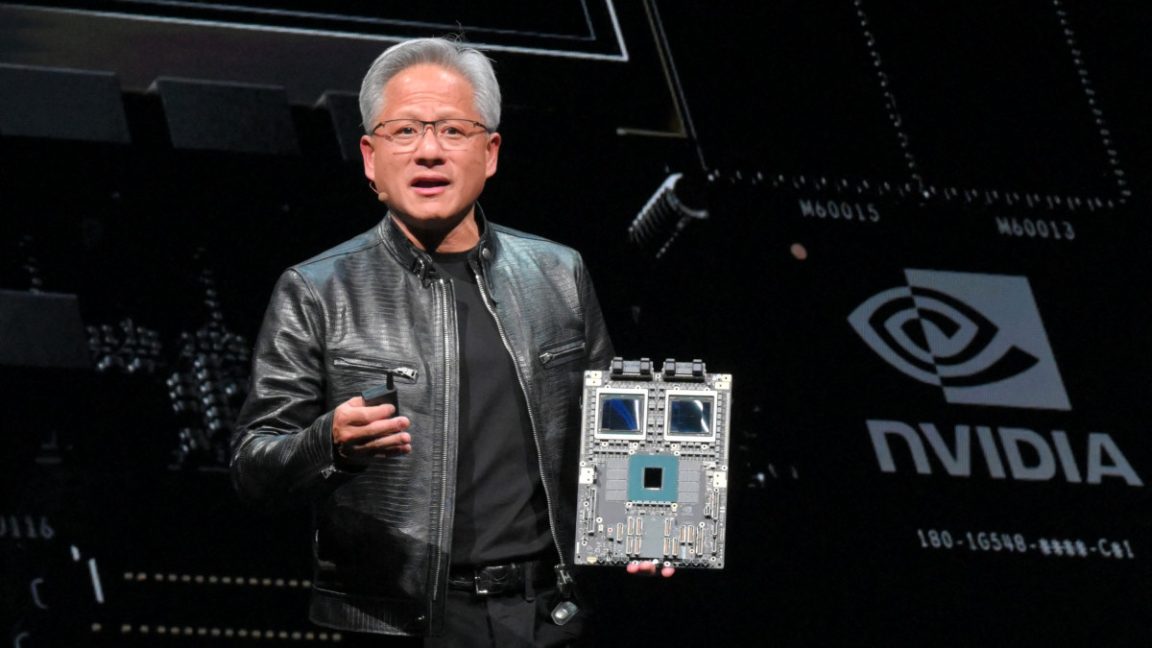
Jensen Huang weighs return as Nvidia chief amid leadership crisis

Jensen Huang is considering returning as chief executive of Nvidia, only days after resigning, according to people familiar with the matter. His possible comeback comes as Silicon Valley allies urge the company’s board to restore him to the position.