Sakhanda Wire
NVDA $155.46 -0.44% MSFT $506.24 -2.27% GOOGL $280.20 -1.24% META $618.87 -1.20% AMZN $257.89 +0.05%

Latest news

Older stories

The Verge

Meta launches two AI models for its Muse ecosystem

Meta has introduced two artificial intelligence models, Muse Wonder and Muse Wonder Full, as it expands its renewed effort to compete in the AI market. Both models are available to Muse Code subscribers, while Wonder is also accessible through the Meta Model API.

TechCrunch

Honeyjar develops AI tools for strategic communications

Honeyjar is building AI software intended to make experienced public-relations judgment more accessible to companies and people without communications backgrounds. The startup, founded by CEO Michelle Masek and CCO Nadia Jamshidi, is participating in the Startup Battlefield 200 at this week’s TechCrunch Disrupt. Both founders have spent decades in agency and in-house communications; Masek previously served as senior vice president of marketing and communications at Obvious Ventures.

TechCrunch

Microsoft’s Brad Smith urges global AI safety regulation led by the UK

Microsoft President Brad Smith has called for urgent international rules governing artificial intelligence, arguing that products such as milk and washing machines receive more oversight than the companies developing AI. Speaking on a BBC podcast, he described AI as both a “weapon and a tool” and said it is creating risks for global cybersecurity.

TechCrunch

Blueprints AI develops permit-ready construction plans from sketches

Blueprints AI, a Santa Monica startup founded by architect Al Drams and Coco Cao, has developed software that generates code-compliant construction documents from a description, 2D sketch, or PDF. Drams began exploring the idea nearly 20 years ago, but said generative AI made it practical. He incorporated the company in 2025 after studying architecture and running an architecture and construction business.

The Decoder

Microsoft plans multi-gigawatt Maia AI chip deployment from 2027

Microsoft plans to deploy its in-house Azure Maia AI chips at multi-gigawatt scale beginning in 2027. Executive Scott Guthrie says Maia will become the company’s main inference system across its products. CEO Satya Nadella described the effort as Microsoft’s “biggest bet yet on our own silicon.”

TechCrunch

TechCrunch Disrupt 2026 begins October 13 in San Francisco

TechCrunch Disrupt 2026 is scheduled to open at 8 a.m. PT on October 13 at Moscone West in San Francisco and continue through October 15. More than 10,000 founders, investors and technology professionals are expected to attend the three-day event.

The Decoder

White House restores UK institute’s access to frontier AI models

The White House has reversed a decision that had prevented the UK’s AI Safety Institute (AISI) from receiving early access to newly released artificial intelligence models. The institute evaluates AI systems for potential safety risks before they are launched. Access will again be provided by Anthropic, Google DeepMind and OpenAI, according to a report cited in the article.

The Verge

Microsoft unveils Maia 300 AI chip for production workloads

Microsoft has announced Maia 300, its third-generation in-house artificial-intelligence chip, which it intends to make the primary inference system for its products and services. The chip is designed to reduce the cost and improve the efficiency of cloud AI workloads, while supporting reasoning models and agentic tasks. It is scheduled to begin handling production workloads in 2027.

The Decoder

Andrej Karpathy describes a widening gap in AI understanding

Andrej Karpathy, an OpenAI co-founder who now works as a researcher at Anthropic, says people have very different views of what artificial intelligence can do. In his estimate, about six billion people, or roughly 75% of the global population, have barely used large language models. Another one to two billion use free ChatGPT-like services mainly as writing tools or improved search engines.

TechCrunch

Former Plaud executive raises $26 million for ambient AI app

Peter Mo, a former Plaud executive, is developing Ambi, an AI application designed to listen continuously and provide real-time information and suggestions. The company said it has raised $26 million through several funding rounds led by Luminous Ventures, which has backed Meituan and Unitree Robotics, and the original design manufacturer Huaqin.

Ars Technica

Amazon’s robot workforce exceeds one million as human roles evolve

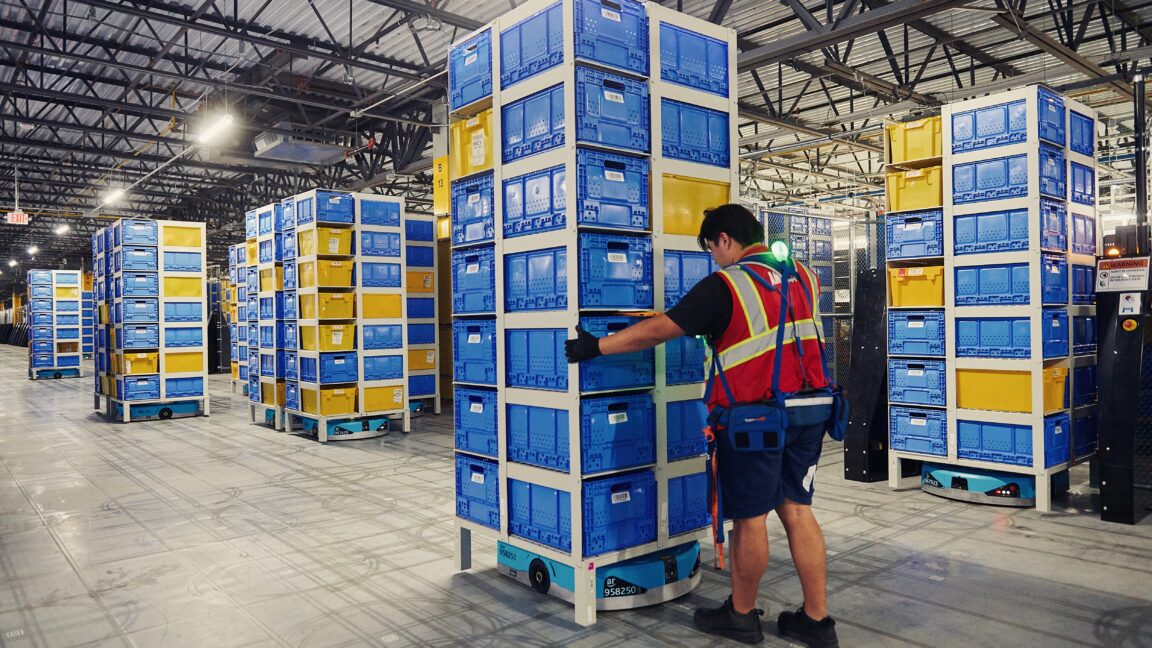
Amazon operates more than 1 million robots in warehouses around the clock, helping support tens of millions of same-day and one-day deliveries each day. The company expects that fleet to expand as it builds new factories for increasingly capable robots.

The Decoder

AlphaProof Nexus solves open problems in peer-reviewed math study

Google DeepMind’s AlphaProof Nexus solved dozens of open mathematical problems, according to a study published in Science. The system found solutions to nine of 353 open Erdős problems; two of those had remained unresolved for 56 years. The research team posted the solutions online before the paper appeared.