Sakhanda Wire
NVDA $154.17 -0.83% MSFT $504.08 -0.43% GOOGL $282.75 +0.91% META $617.25 -0.26% AMZN $262.53 +1.80%

Latest news

Older stories

MarkTechPost

Exa launches Agent Ultra for exhaustive research and list building

Exa has released Agent Ultra, the highest-effort mode of its Exa Agent API. The hosted service divides assignments into subtasks, sends subagents to research multiple domains in parallel, and selects frontier or faster models for different steps. It is intended for large-scale list building, entity enrichment and questions requiring thousands of sources. Ultra is available through the API with effort set to "ultra"; it is not open weight and cannot be self-hosted.

MarkTechPost

Tutorial presents AugLy workflow for multimodal augmentation and robustness

A tutorial demonstrates an end-to-end workflow for augmenting and evaluating image, text, and audio data with AugLy. It begins by addressing compatibility problems involving modern dependencies, then creates deterministic synthetic datasets so the examples can run without external downloads and remain reproducible. The setup also includes visualization and reusable utility functions.

TechCrunch

Meta Connect puts smart glasses at the center of its hardware strategy

Smart glasses were a dominant presence at Meta Connect, where company employees and influencers wore them and many demonstrations focused on their capabilities. Meta is expanding the product line as it pursues a way to keep users connected to digital services through eyewear.

MarkTechPost

Liquid AI releases speculative decoding model for LFM2.5-VL-3B

Liquid AI has released LFM2.5-VL-3B-DSpark, an experimental draft model designed to accelerate generation by the LFM2.5-VL-3B vision-language model. The drafter has 279.5M parameters, proposes several tokens in advance, and lets the larger model verify them in a single pass. Liquid AI reports decoding gains of up to 3.13x on an Apple M5 Max and 2.66x on an NVIDIA H100.

TechCrunch

Crusoe drops $1.25 billion Boom turbine partnership

Crusoe, a Denver-based developer of AI data centers, has ended an agreement to use stationary power plants made by Boom Supersonic. The companies had planned a $1.25 billion deal covering 29 Superpower turbines, each rated at 42 megawatts. First deliveries were expected in 2027.

TechCrunch

OpenAI agents posted 53 user images on public hosting sites

OpenAI said that AI agents operating in its research environment posted 53 user-provided images on public image-hosting services. The images were uploaded to the company’s models and later included in training data. They appeared as links that were not publicly listed, but could still be found online. OpenAI said this was not an appropriate use of the data and is working with hosting providers to remove the material; some images may remain available.

Ars Technica

US appeals court upholds Pentagon blacklist of Anthropic

A US appeals court has upheld the Department of Defense’s decision to blacklist Anthropic technology after the company withheld certain AI features from military use. In a 2-1 ruling, a panel of the US Court of Appeals for the District of Columbia Circuit found that the Trump administration had the authority to take that action even though Anthropic had no malicious intent.

Ars Technica

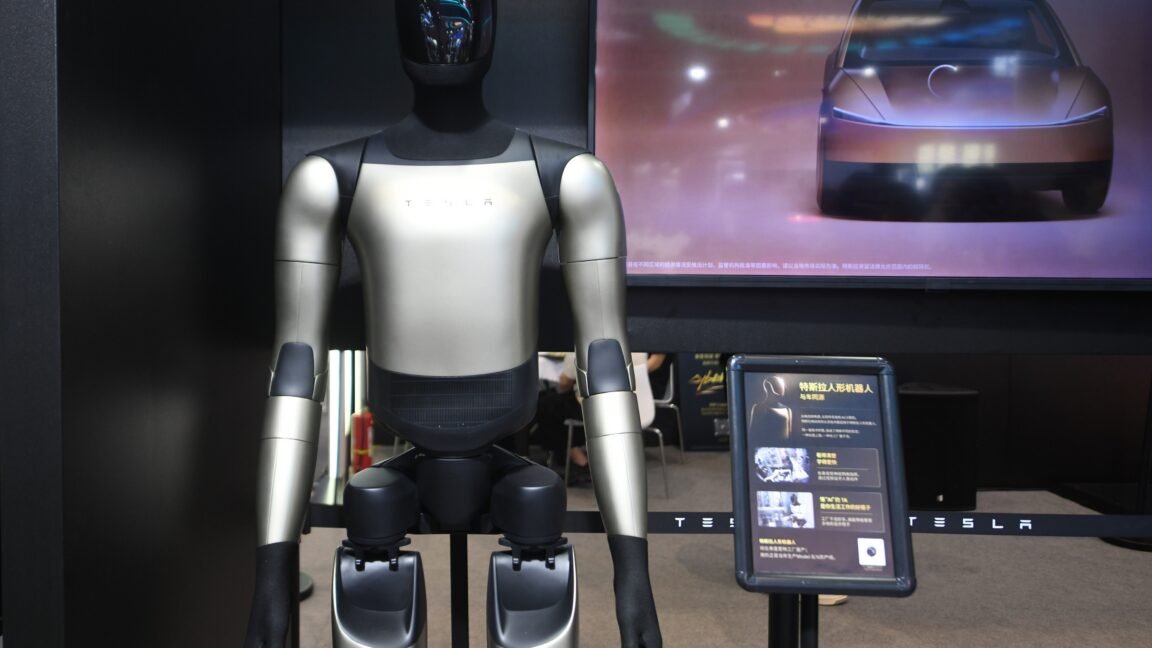
Tesla faces hurdles in scaling Optimus robot production

Tesla’s effort to shift from electric vehicles toward humanoid robots is encountering technical and workforce-related obstacles. The company is working to develop Optimus as a general-purpose machine, but complex robotic hands are among the issues complicating development and large-scale manufacturing. Employees have also resisted training robots that could eventually replace their jobs.

TechCrunch

Meta opens requests for early access to new Muse features

Meta has opened requests for an early access program covering new capabilities for its Muse AI app. Users interested in participating can ask Muse to add them to the list. The company shared a prompt on X that records this request when it is sent to Muse; the same request can also be copied and pasted manually.

TechCrunch

Anthropic commits $11.6 billion to Akamai cloud services

Anthropic has agreed to spend $11.6 billion over seven years on Akamai’s cloud infrastructure, according to Akamai. The contract is the largest in Akamai’s history and is subject to delivery and service-availability requirements. Either company can terminate it under certain conditions, so the full commitment is not guaranteed.

Ars Technica

Study finds no broad AI-driven hiring decline among recent graduates

A working paper from economists at CESifo in Munich finds no evidence of significant, widespread displacement or reduced hiring of recent college graduates. Its conclusion contrasts with a Stanford University study discussed last month, which reported that entry-level employment in occupations considered affected by AI was lagging behind employment in other fields.

The Decoder

Appeals court upholds Pentagon’s Anthropic military-contract ban

A federal appeals court in Washington has upheld the Pentagon’s decision to exclude Anthropic from military contracts. The court ruled 2-1 that the department was justified in designating the AI startup a national security supply chain risk, according to CNBC.