Sakhanda Wire
NVDA $150.96 -2.89% MSFT $508.29 +0.40% GOOGL $282.44 +0.80% META $616.38 -0.40% AMZN $267.74 +3.82%

Latest news

Older stories

TechCrunch

U.S. restrictions may redirect China’s robotics expansion

Washington tightened controls on foreign-made advanced robotic systems in July and August and imposed steep tariffs on imported drones and components, citing national-security concerns. Drone tariffs begin in September, while additional component tariffs are scheduled for 2027. The measures extend the FCC’s Covered List, created in 2021 and initially focused on telecommunications and surveillance equipment.
MarkTechPost

Benchmark finds TTFT alone cannot measure voice-agent latency

A benchmark of voice-agent infrastructure argues that time to first token (TTFT) is useful for comparing inference APIs, but insufficient for judging conversational responsiveness. Text-to-speech systems generally need a complete clause or sentence before producing audio, so time to first sentence (TTFS) can better reflect what users hear. LiveKit’s latency model places speech-to-text at roughly 100–200ms, streaming LLM inference at 300–500ms, text-to-speech at 100–200ms, and network transport at 50–150ms, with a practical end-to-end target of 700ms to 1.2s.

MarkTechPost

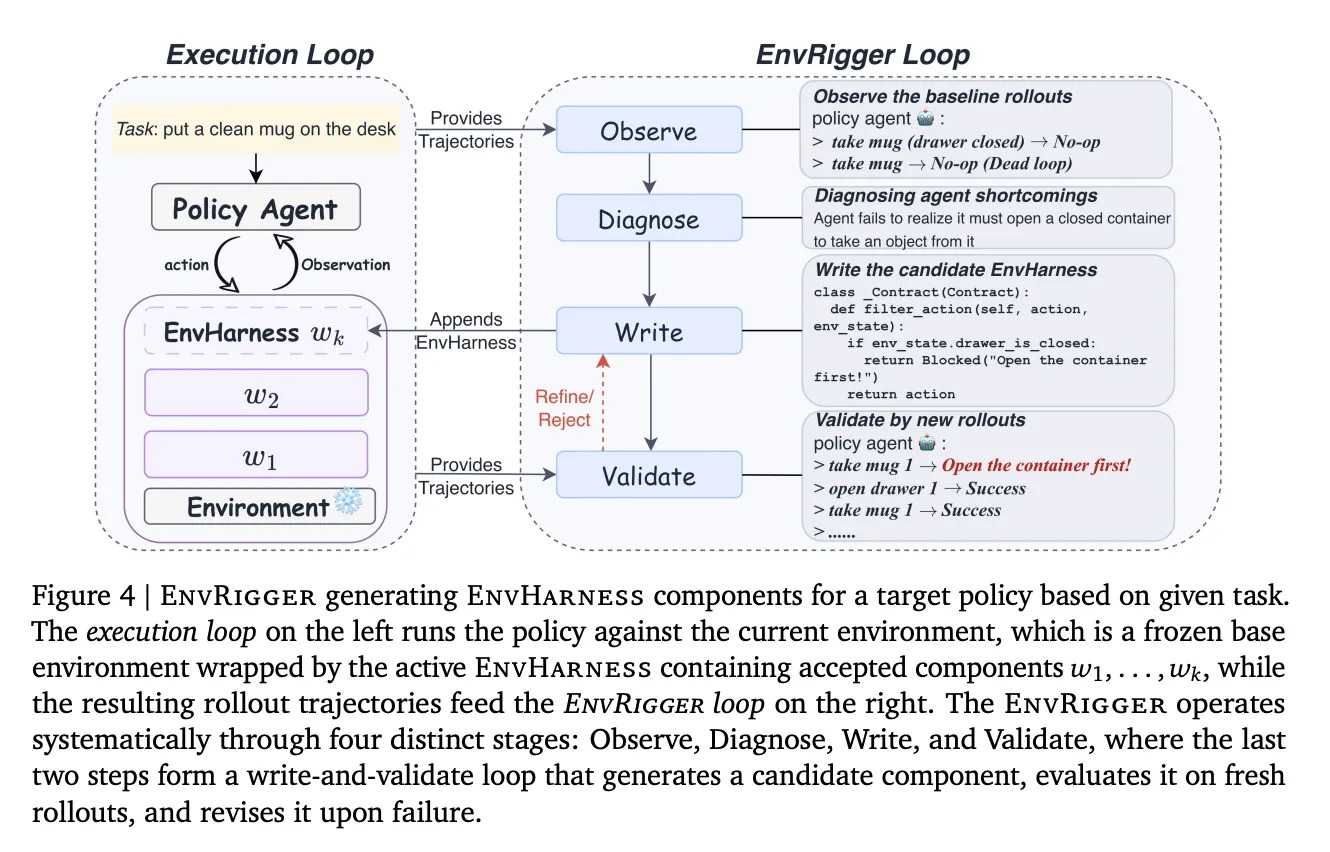
Google researchers introduce EnvHarness for adaptive agent training environments

Researchers from Google Cloud AI Research, Washington University in St. Louis and UNC Chapel Hill have released EnvHarness, an Apache-2.0 software layer for adapting otherwise static agent benchmarks. It wraps an existing environment without changing its simulator, tasks or human-built verifier, using the standard reset() and step() interface to alter episode starts, available actions and observations.

TechCrunch

SpaceX foundry aims to speed gas turbine production for AI power

Elon Musk says SpaceX is building a foundry in Bastrop, Texas, to cast turbine blades and vanes in-house. The facility emerged after job listings referred to a “blades and vanes foundry” and after SpaceX acquired roughly 830 acres near its Starlink factory. Musk said the company’s approach could bring natural-gas turbines online up to 18 months sooner, while gas supplements solar development over the next several years.

The Verge

Texas freezes funding for additional Flock surveillance cameras

Texas Governor Greg Abbott has frozen state spending on additional Flock cameras as criticism of the company’s AI-powered surveillance system grows. The decision came shortly before a Texas Tribune investigation reported that the state had spent over $30 million on Flock cameras. The funding was primarily raised through a $1 fee added to insurance policies, reportedly to help combat catalytic converter theft.

TechCrunch

Caterpillar expands mining automation expertise into broader AI deployment

Caterpillar is applying lessons from decades of autonomous mining operations to AI deployment in construction, quarries and other industrial settings. The company sells automated haul trucks, drills, underground loaders and dozers, alongside remote-controlled equipment, fleet-management software and a command center for autonomous operations.

The Decoder

Workplace sentiment toward AI declines as employee criticism grows

An analysis of U.S. employee reviews on Glassdoor found a sharp shift in attitudes toward artificial intelligence. Positive AI-related comments fell from 81% in 2019 to 43% by mid-2026, while negative comments reached 53%. References to AI, LLMs, GPTs, artificial intelligence or OpenAI also became more common, rising from below 0.2% of reviews in 2019 to above 2.3% in May 2026. AI mentions increased 240% between May 2025 and May 2026.

Ars Technica

Meta tests robots for routine work inside data centers

Meta is testing robots for physical tasks in its data centers, including plugging in cables, resetting servers and handling other work currently performed by technicians. The effort has not previously been reported and was described by several current and former workers familiar with the projects. They spoke anonymously because they were not authorized to discuss them publicly.

The Decoder

GPT-4o raised grades in a Bocconi University experiment

An experiment involving 1,053 freshmen at Bocconi University found that access to GPT-4o substantially improved performance on a marketing assignment. In November 2025, students from 13 sections of an introductory management course were assigned to a control group, a causal-reasoning lesson, GPT-4o access, or both. They wrote recommendations for the university’s merchandise shop in no more than 180 words.

The Decoder

Claude Code’s Weekly Limits Will Drop Despite a Permanent Increase

Anthropic will change the weekly usage limits for its Claude Code coding assistant on September 14. The permanent baseline for Pro, Max, Team, and Enterprise plans will be 25 percent higher than the original level. However, a temporary 50 percent increase is currently in effect, so the transition will reduce available capacity by about 17 percent compared with what users have now.

The Decoder

Sony and Warner sue Anthropic over alleged copyright infringement

Sony Music, Warner Music and other music publishers have filed a lawsuit against Anthropic in federal court in Northern California. The complaint alleges that the company downloaded and used tens of thousands of copyrighted musical compositions, primarily song lyrics, to train Claude without permission. CEO Dario Amodei and co-founder Benjamin Mann are also named as defendants over their alleged roles in directing and overseeing the downloads.

MarkTechPost

Anthropic Previews a Shared Standard for AI-Controlled Hardware

Anthropic has opened a research preview of the Model Hardware Standard (MHS), a shared driver specification for AI agents working with physical devices. The standard targets the integration work required when laboratory or industrial equipment comes from different vendors. Anthropic says setups that usually take weeks or months can be reduced to hours or minutes.