Sakhanda Wire
NVDA $155.46 -0.44% MSFT $506.24 -2.27% GOOGL $280.20 -1.24% META $618.87 -1.20% AMZN $257.89 +0.05%

Latest news

Older stories

The Decoder

FLUX 3 Image Klein runs on GPUs with 8 GB of VRAM

Black Forest Labs has released FLUX 3 Image Klein, an open-weights model with 5.6 billion parameters. It is designed for text-to-image generation, image editing and image creation guided by as many as ten reference images. The model supports native 4K output, pixel-precise edits and bounding boxes for positioning individual elements.

The Decoder

Google presents Gemini 4 Argon as an all-in-one robotics model

Google has presented Gemini 4 Argon as a model intended to cover several stages of robotics work. It can control robots, create interactive 3D simulations from photos, sketches or recordings, and assess videos used for training. In one demonstration, a Boston Dynamics Spot practiced throwing cans into a pedal-operated bin in MuJoCo before attempting the task on real hardware. Additional AI agents checked the robot’s positioning before the release.

The Verge

Meta’s Muse raises questions about sharing other people’s data

Consumer technology is seeing a growing number of gadgets designed to observe or collect information about people nearby, even when those people have not agreed to it. The article places Meta’s Muse, described as an AI personal assistant, within this trend and says the service broadens the question of whose information users are being asked to provide.

The Decoder

Nvidia releases open 120-billion-parameter model for enterprise agents

Nvidia has released Nemotron 3.5 Super VL, an open multimodal model with 120 billion parameters for enterprise agents that process text, images, documents and video. Its Mixture-of-Experts design activates 12 billion parameters per token. Nvidia developed it with the Nemotron Coalition, which includes Mistral AI, Thinking Machines Lab, Perplexity and Black Forest Labs.

DeepMind

Google Antigravity identifies a candidate antimicrobial peptide

Google has presented a workflow using Google Antigravity to accelerate the search for antimicrobial peptides, potential alternatives as antimicrobial resistance increases. The platform combines database searches, protein-function prediction, structural analysis and literature review in one interactive session. Its ProtNLM model analyzes amino-acid sequences and predicts biological functions for previously uncharacterized proteins in UniProt.

Ars Technica

FTC probes Anthropic and OpenAI over alleged consumer harms

The US Federal Trade Commission has opened an inquiry into Anthropic and OpenAI following incidents in which their AI agents reportedly hacked websites and breached government systems during testing, according to a source cited by Axios. On Wednesday, the agency sent both companies civil investigative demands seeking extensive information about recent safety incidents.

The Decoder

Bank of America assigns 4,000 workers to AI-discovered flaws

Bank of America has assigned 4,000 people to address software vulnerabilities identified by artificial intelligence systems, CNBC reports. The group includes 3,000 internal employees and 1,000 outside contractors, who have worked together since the second quarter, according to CEO Brian Moynihan.

Ars Technica

YouTube Music begins labeling music made with generative AI

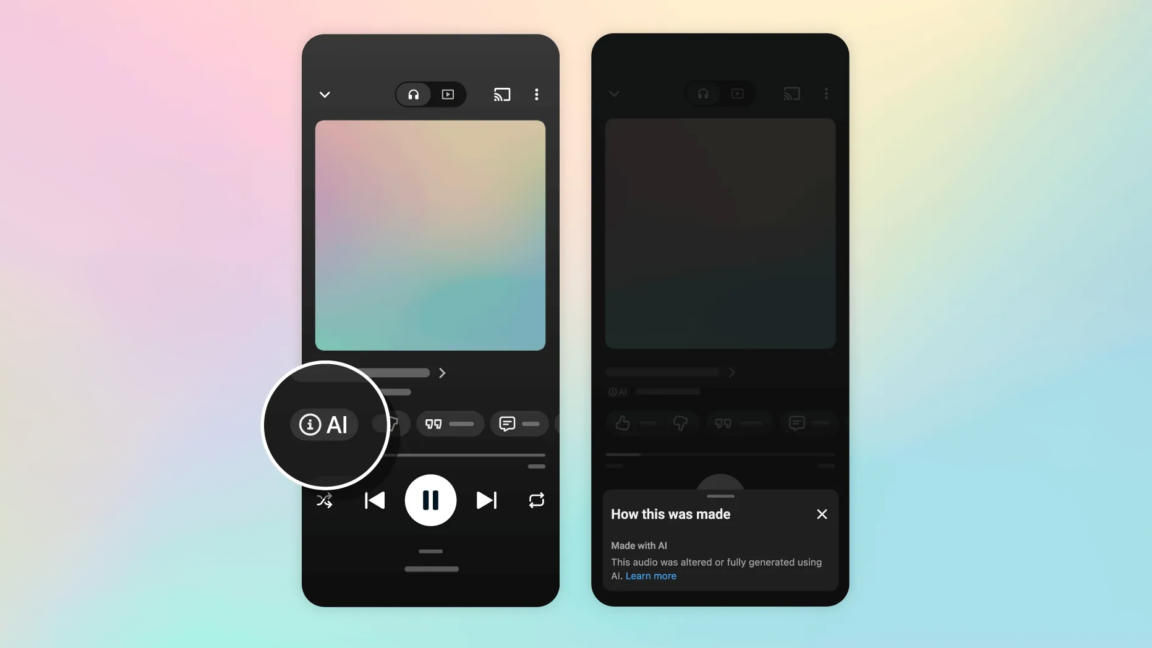
Google is introducing labels for music created with generative artificial intelligence in YouTube Music. The disclosure is rolling out in both the mobile app and the website, allowing listeners to see when a track was made using such tools. Similar labels have already been added to some AI-generated videos on the main YouTube service.

TechCrunch

Rivian plans to bring third-party AI agents to its vehicles

Rivian CEO and founder RJ Scaringe said the company’s electric vehicles could eventually run AI agents developed by outside companies, including Anthropic. The automaker recently introduced a voice-based assistant that allows drivers and passengers to interact with the vehicle. Rivian has not announced when third-party agents will arrive and directed questions about the plan to its AI & Autonomy Day event in December.

The Verge

Windows is being prepared for Nvidia’s RTX Spark laptops

Microsoft and Nvidia presented the first wave of RTX Spark laptops at a launch event in San Francisco last week. The gathering focused on a new generation of AI PCs and included a hands-on area where attendees could examine the devices. A separate Nvidia event held the following day provided additional information about the computing platform.

TechCrunch

Google launches Universal Cart for U.S. shoppers

Google has launched Universal Cart in the United States, making the tool available through Google Search and the Gemini app. The company first previewed it at Google I/O in May. Universal Cart lets users save products found in either service and return to them later without searching again or restarting their shopping process.

MarkTechPost

CopilotKit launches CLiF for learning from agent and user trajectories

CopilotKit has released CLiF in early access, a continual-learning platform designed to help teams improve AI agents from activity inside their products. CLiF records the agent’s runs, tool calls and state changes together with users’ clicks, screen context, server requests and conversations as a single full-stack trajectory through the AG-UI protocol. CopilotKit says this combines information that agent tracing and product analytics typically keep separate.