Sakhanda Wire
NVDA $155.46 -0.44% MSFT $506.24 -2.27% GOOGL $280.20 -1.24% META $618.87 -1.20% AMZN $257.89 +0.05%

Latest news

Older stories

MIT Tech Review

Humanoid robot progress remains far from everyday usefulness

Humanoid robots are appearing in videos performing simple tasks such as serving food, vacuuming and pressing buttons, but robotics researchers say these demonstrations do not show that general-purpose machines are close to widespread use. Tesla CEO Elon Musk has predicted that Optimus will eventually work in factories and homes, with public sales possible by the end of 2027. He has also said the robots could perform much of human labor. Other technology executives have made similarly ambitious forecasts, while Morgan Stanley has projected nearly 1 billion humanlike robots by 2050.

MarkTechPost

Architect launches Liquid Inference auction router for LLM requests

Architect Financial Technologies has introduced Liquid Inference, an exchange-style router that lets inference providers compete for individual LLM requests. Providers submit offers for specific models, and the lowest-priced offer that satisfies the buyer’s conditions is selected. The maximum price is fixed before generation begins, while billing covers measured usage.

MarkTechPost

NVIDIA Researchers Introduce PivotOPD for Recovering AI Agents

Researchers from NVIDIA, Princeton University and the University of Maryland introduced PivotOPD, an on-policy distillation method for multi-turn language-model agents. It is a training technique rather than a new model and adds no inference cost. Tests used Qwen3-1.7B and Qwen3-8B students, with additional evaluation of a Nemotron-3.5-SFT student on SWE-Bench Verified.

MIT Tech Review

Industrial AI advances raise new safety and governance challenges

Industrial AI is moving beyond predictive analytics toward foundation models, physical AI, and agentic AI that can automate more complex work. Unlike software operating only in digital environments, these systems may interact with equipment and infrastructure, so unexpected decisions can affect safety, reliability, and essential services.

MarkTechPost

Perplexity releases two multimodal embedding models for local deployment

Perplexity has released pplx-embed-v2-late, a pair of ColBERT-style multimodal embedding models available on Hugging Face under the MIT license. The 0.6B version is intended for low-cost, fast query encoding on laptops, edge devices or small GPUs, while the 9B model is designed to build higher-quality document indexes. Both handle text, images and rendered PDF pages in a shared embedding space. A hosted Perplexity API endpoint is planned but is not yet available.

MarkTechPost

Unsloth Studio adds layered checks before running model code

Unsloth has launched the beta desktop app Unsloth Studio after more than 500 million downloads of its projects and years of requests from the open-source community. The app brings model installation, fine-tuning and local execution into a single dashboard. Its security design was influenced by a compromised LiteLLM release on PyPI and an infostealer hidden in a Hugging Face repository that imitated an OpenAI Privacy Filter model.

Ars Technica

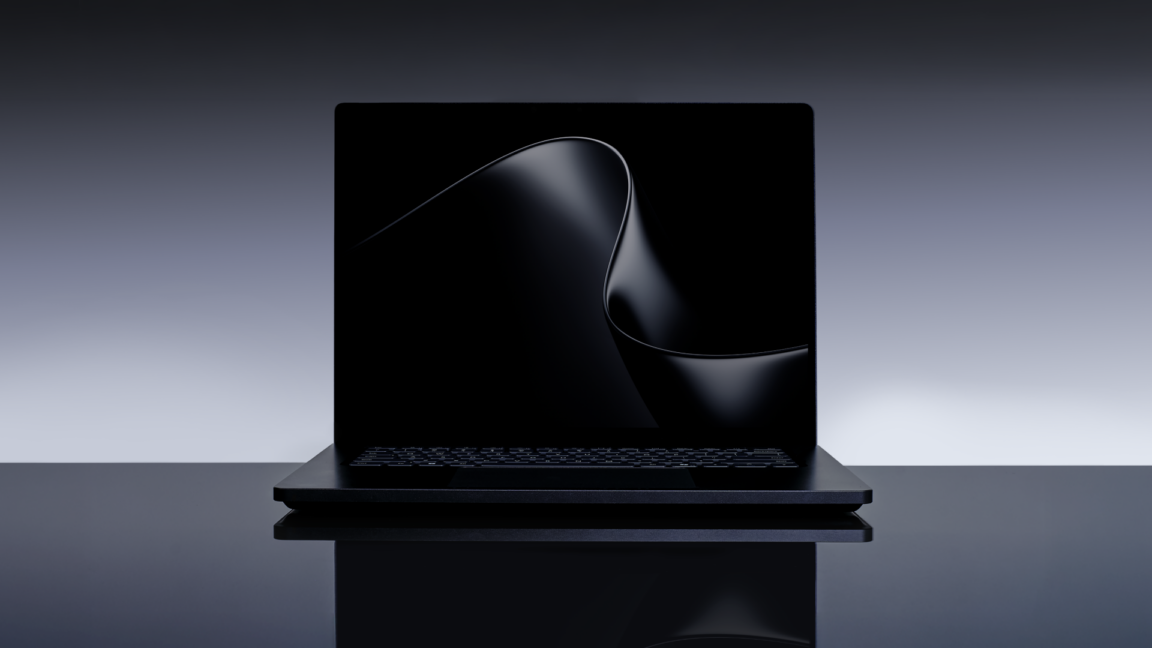
Microsoft unveils Surface Laptop Ultra and Windows 11 AI updates

Microsoft used its first live event in two years to introduce the Surface Laptop Ultra, outline upcoming changes to Windows 11, and present its view of how local AI and agentic workflows could influence personal computing. The company addressed both developers and home enthusiasts, while emphasizing the growing role of AI on Windows desktops.

Hugging Face

ML-intern helps build small custom models for specific tasks

A Hugging Face article describes how ML-intern, an agent available in HuggingChat, was used to create several models that were not already available in the desired form. One project produced a 0.8B prompt rewriter for Qwen-Image 2.1. It runs on a CPU, returns valid output 99.7% of the time and uses about a quarter as many tokens as the 9B teacher model. The full project, including 8,797 labeled requests, cost about USD 16.

Ars Technica

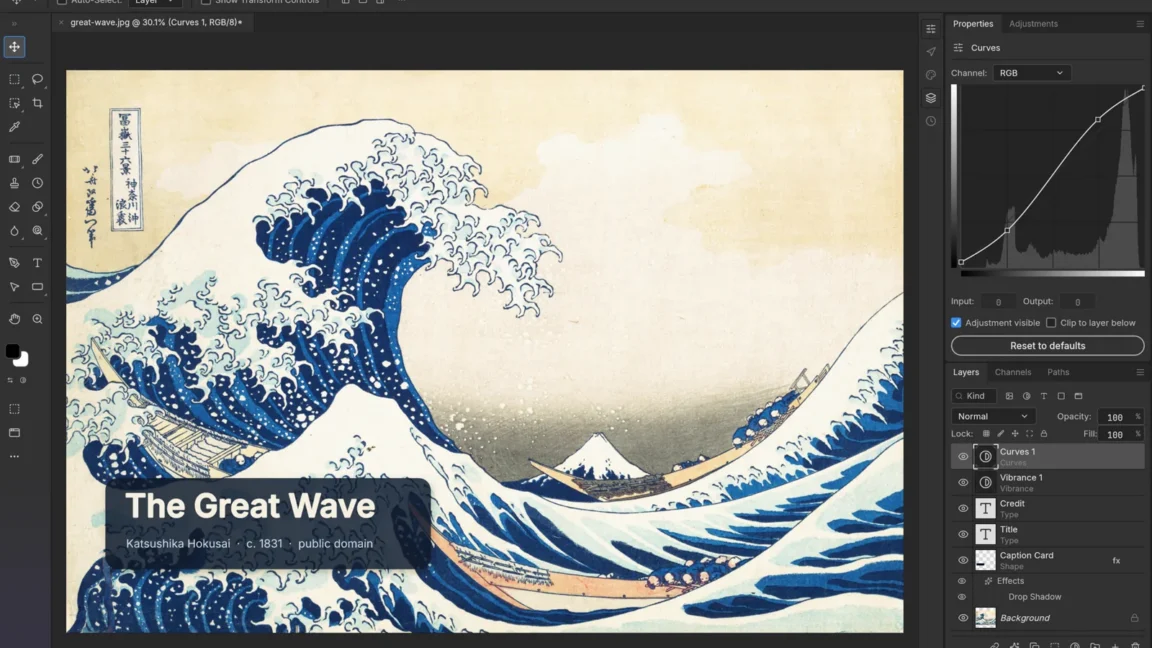
Artcraft unveils open-source alternatives to Adobe’s Creative Cloud apps

Artcraft, which began last year as a “controllable AI for artists,” has shifted toward a broader software project. Its new suite consists of seven open-source applications designed to reproduce the interfaces and tools associated with Adobe Photoshop, Illustrator, Premiere, Lightroom, After Effects, InDesign, and Acrobat Pro.

TechCrunch

Nous Research raises $90 million at a $1.5 billion valuation

Nous Research has raised $90 million in a Series B round that values the three-year-old startup at $1.5 billion. Robot Ventures led the financing, joined by Nvidia, Union Square Ventures, Menlo Ventures, Samsung and 1789 Capital, where Donald Trump Jr. is a partner. The deal brings the company’s total funding to $158 million.

MarkTechPost

Anthropic launches Claude Haiku 5.5 with one-million-token context

Anthropic has released Claude Haiku 5.5, a small model designed for high-volume tasks such as summarization, classification, document question answering and subagent work. It accepts text and images, produces text, supports a context window of 1 million tokens and can generate up to 128K tokens. The model is generally available through the Claude API, Amazon Bedrock, Google Cloud, Microsoft Foundry and Claude Platform on AWS.

TechCrunch

Microsoft unveils Nvidia-powered Surface Laptop Ultra and Dev Box

Microsoft has disclosed the specifications and starting prices for two Windows PCs built around Nvidia’s RTX Spark chip. The Surface Laptop Ultra will be offered in two base configurations, starting at $2,600 and $3,700. Expanding the memory and storage can raise the price to $5,900, although Microsoft says the most expensive version is already out of stock.