Sakhanda Wire
NVDA $155.46 -0.44% MSFT $506.24 -2.27% GOOGL $280.20 -1.24% META $618.87 -1.20% AMZN $257.89 +0.05%

Latest news

Older stories

TechCrunch

TechCrunch Disrupt 2026 to feature interactive AI and startup roundtables

TechCrunch Disrupt 2026 is scheduled for October 13-15 at Moscone West in San Francisco, with more than 10,000 founders, investors, operators and technology leaders expected. Roundtables are included with admission and will run in two dedicated spaces during the three-day event. Organizers say attendees can bring questions, compare experiences and discuss practical challenges across fundraising, hiring, enterprise software, AI and company growth.


Ars Technica

Mistral unveils open-weight 1-trillion-parameter model

French AI company Mistral has released Mistral Large 4, a 1-trillion-parameter model that it says can compete with leading systems developed in the United States and China. The model, nicknamed “Le Chonk,” is currently offered as a preview, while a final version is expected by the end of the month. Mistral says users can access, customize, and use it freely.

Ars Technica

Google Opens SynthID Detector to Watermarks From AI Partners

Google has launched a public SynthID website for checking whether digital content contains an AI watermark. The service can identify SynthID signals from Google and its partner companies, including watermarks that were previously outside the reach of Google’s detector. It is available for anyone to use globally.

TechCrunch

Disrupt 2026 offers discounted passes before October 13

TechCrunch Disrupt 2026 will bring more than 10,000 people from the global startup and technology community to Moscone West in San Francisco in six days. Online registration remains available before the event opens on October 13, with discounts of up to $100 on passes. A second eligible pass can be purchased at 50% off when registering before the event. People who have been laid off can obtain an Expo+ Pass for $75.

TechCrunch

Google opens SynthID media verification site to everyone

Google has launched a public website that allows anyone to check whether an image, video or audio file was generated with artificial intelligence. The company previously offered the service to selected journalists, media professionals and researchers for testing at Google I/O last year. The site accepts a range of common formats, including JPG, PNG, WEBP, HEIC and GIF images; MP4, MOV and WEBM videos; and WAV, MP3, FLAC, AAC and M4A audio files.

Hugging Face

Nemotron Systems Reach Gold-Level Results in IOI and IMO

Teams working with Nemotron 3 developed specialist systems that achieved gold-medal-level results in both the International Olympiad in Informatics (IOI) 2026 and the International Mathematical Olympiad (IMO) 2026. The IOI system, Nemotron-3-Ultra-CC, was fine-tuned with supervised fine-tuning and used GenCorrect, an iterative generate-evaluate-refine process. It scored 535.4 out of 600, above the 361.12 gold threshold and the top human score of 498.27.

The Decoder

ChatGPT rated unacceptable risk for teenagers after safety test failures

The Common Sense Media Youth AI Safety Institute has rated ChatGPT for Teens an “unacceptable risk” for minors after conducting more than 4,000 test prompts. The organization said OpenAI’s safeguards failed in several critical areas and called for teenagers to stay off the service until independent testing confirms that it is safe.

The Decoder

Anthropic expands Claude access for security research

Anthropic is expanding its Cyber Verification Program (CVP) to more vetted security organizations and individual researchers. Participants can use Claude’s most powerful AI models with reduced safety filters for vulnerability research, malware analysis, incident response and penetration testing. Public Claude access generally blocks much of this work because the same capabilities could be misused by attackers. Code review and patching known flaws remain available without special access.

Google AI

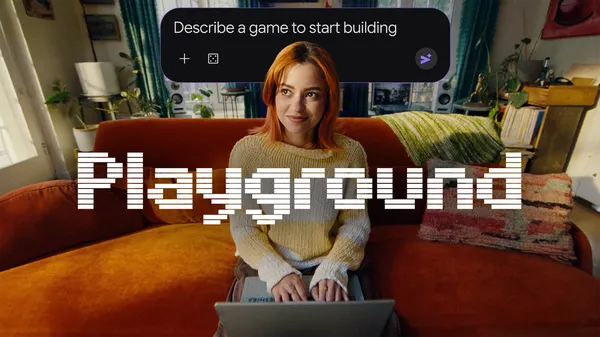
Playground lets users create and share games without coding

Playground is an experimental, browser-based gaming platform that lets people create, play and share custom games without coding experience. Users describe what they want through text prompts, begin with a blank canvas or starter prompts, and test their ideas immediately. The conversational interface can be used to change physics, rules, characters and environments.

The Verge

Bites gives restaurants direct access to delivery customer data

Food delivery platforms have helped restaurants remain in business, particularly during the pandemic, but many owners object to their fees and operating rules. Complaints include high commissions, payments for advertising or better placement, and the distance that third-party services create between restaurants and their customers.

The Verge

Common Sense Media Calls ChatGPT for Teens an Unacceptable Risk

Common Sense Media, a nonprofit that reviews apps, services, and entertainment with a focus on youth safety, has described OpenAI’s ChatGPT for Teens as an “unacceptable risk.” The teen version, introduced in August, includes safeguards intended for younger users, including notifications related to eating disorders and a study mode.

The Decoder

AI model publishes 372 mathematical results with Lean formalizations

OpenAI has released 372 mathematical results generated by an internal frontier model in a GitHub repository. The company says the collection addresses open problems or makes substantial progress toward them, including improvements to major computer algorithms and work related to the Riemann hypothesis. The repository contains revision logs and citations, while OpenAI says a separate solution to a Navier–Stokes problem has been under formal review for weeks.