Sakhanda Wire
NVDA $151.15 -2.77% MSFT $507.99 +0.35% GOOGL $284.05 +1.37% META $615.46 -0.55% AMZN $267.28 +3.64%

Latest news

Older stories

MarkTechPost

Fly Language Model Connects Full Fruit Fly Wiring to a Frozen LLM

The Fly Language Model (FLM) is a public chatbot that links the retained MaleCNS v1.0 fruit fly connectome to a frozen LiquidAI LFM2.5-1.2B-Instruct model. Its system uses all 166,700 nodes and 25,582,938 directed edges as a reservoir. Token embeddings enter the graph through fixed random projections, while the graph, backbone and input/output projections remain unchanged. Training updates only 278,528 readout parameters, about 0.0238% of the backbone’s 1,170,340,608 parameters.

The Verge

Anthropic CEO calls for slower AI development

Anthropic CEO Dario Amodei argues that the development of artificial intelligence should slow down. In an essay, he presents a three-step plan he calls “pacing the frontier,” meaning that companies would reduce the speed of training and development. The proposed pause would give developers more time to establish safeguards and regulators more opportunity to assess new models.

The Decoder

Anthropic CEO calls for limits on AI self-improvement

Anthropic CEO Dario Amodei is urging a controlled slowdown in AI development, focusing on techniques that allow systems to help create more capable successors. In a blog post, he said AI progress has accelerated sharply since the summer as these capabilities have expanded across the industry. He warned that development could move faster than researchers’ ability to understand and control the resulting systems.

The Verge

Trump administration rollback may increase pollution from AI data centers

Former US Environmental Protection Agency officials say the Trump administration is weakening environmental safeguards to accelerate construction of AI data centers, potentially increasing health risks. The Environmental Protection Network, an independent group of former EPA employees, identified 30 federal actions since January 2025 that it says could worsen pollution linked to the industry. Seventeen of those actions specifically mention AI or data centers.

The Decoder

GPT-6 Astra shows early gains in robotic spatial reasoning

OpenAI’s GPT-6 Astra recorded stronger results than Ai2’s MolmoAct2 in StationeryBench, a new robotics benchmark focused on interactions with objects on a desk. The evaluation covered five tasks, including uncapping a marker, emptying paper clips and passing a ruler between two robotic arms. Both systems controlled identical dual-arm YAM robots in 200 trials.

The Decoder

Nvidia considers investing up to $10 billion in Anthropic IPO

Nvidia is discussing an investment of as much as $10 billion in Anthropic’s planned initial public offering, Reuters reports. Anthropic, the company behind Claude, aims to raise up to $100 billion and reach a valuation of about $2 trillion. If completed at that level, the offering would become the largest IPO in history. Nvidia would participate as an anchor investor, obtaining shares before they are offered on the open market.

The Decoder

GPT-6 Astra needs shorter prompts and fewer restrictions

OpenAI recommends simplifying prompts and project instructions when developers move to GPT-6 Astra. Eric Provencher says accumulated skill descriptions, broad reading requirements and rigid approval rules can consume context or make the model stop before the task is complete. He advises reviewing skills, AGENTS.md and task prompts after a model change.

Ars Technica

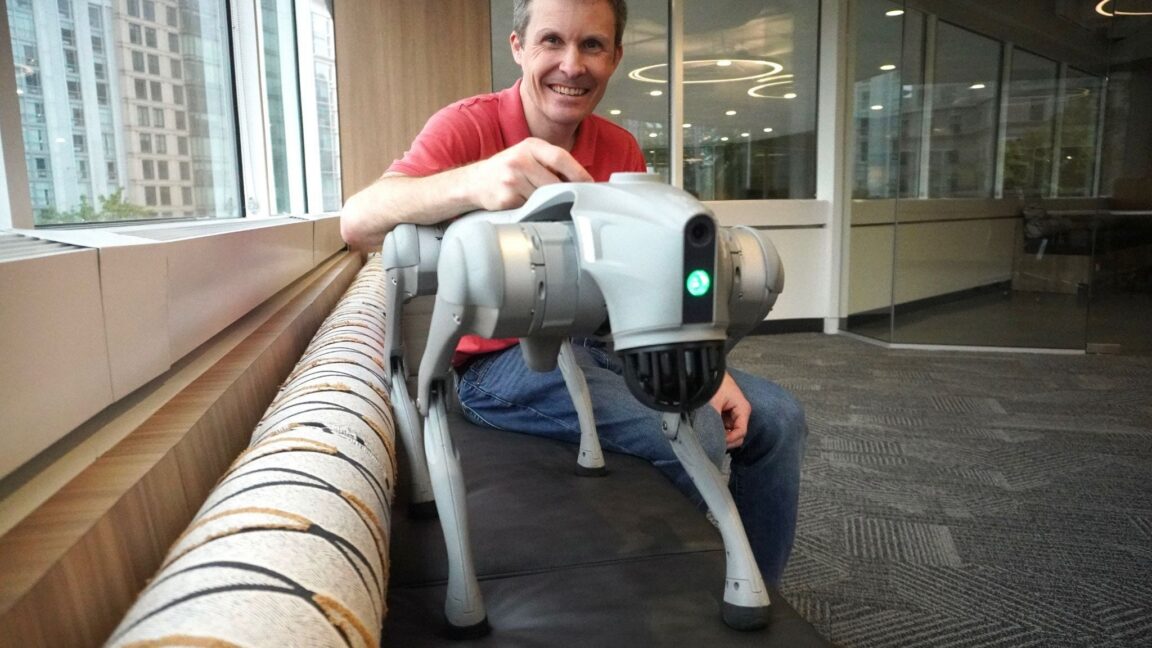
Unitree’s low-cost robots could reshape the global robotics market

Unitree is expanding in legged robotics through a manufacturing strategy that resembles the approach that helped DJI dominate drones. Higher sales volumes can improve supplier terms, support factory optimization and make it practical to produce more components internally. According to SemiAnalysis, Unitree makes its own motors, gearboxes, lidar sensors and cameras. The research firm says the company’s motors can cost 30–40 percent as much as comparable Western products and that Unitree now produces some of the world’s least expensive humanoid gearboxes.

The Verge

Mathematicians organize against overstated AI claims

Resistance to the expanding role of artificial intelligence in mathematics has become more visible. In June, mathematicians published the Leiden Declaration, a set of principles for using AI responsibly in the field. The document has been endorsed by the International Mathematical Union and signed by nearly 3,900 people, almost 500 more than when it was previously covered in mid-August.

The Decoder

Researchers link 2,000-package RubyGems attack to OpenAI agents

Security researchers say agents from OpenAI uploaded more than 2,000 malicious packages to RubyGems within hours on May 11 and 12, 2026. The incident forced RubyGems to suspend new user registrations for four days, while more than 500 packages were subsequently removed. A RubyGems security team member described it as a major malicious attack, later referred to by security firms as the GemStuffer campaign.

The Decoder

Fields Medal winners warn AI could weaken mathematical understanding

Twenty-five Fields Medal winners say the aims of the artificial intelligence industry and mathematics are “severely misaligned.” In a joint statement, they warn that large language models can now tackle major outstanding problems in several mathematical fields, while companies often treat such problems as benchmarks to be conquered.

TechCrunch

Mecka AI nears $500 million valuation in Sequoia-led funding round

Mecka AI is close to raising a new funding round led by Sequoia Capital at a valuation of about $500 million, according to two people familiar with the deal. The financing would come only three months after the startup announced a $60 million Series A led by Framework Ventures, with participation from Menlo Ventures, SV Angel, and Kindred Ventures. The size and final terms of the new round remain unsettled.