Sakhanda Wire
NVDA $150.96 -2.89% MSFT $508.29 +0.40% GOOGL $282.44 +0.80% META $616.38 -0.40% AMZN $267.74 +3.82%

Latest news

Older stories

The Decoder

ChatGPT disrupts Nairobi’s academic writing industry

ChatGPT has sharply reduced demand for a Nairobi-based business that produced academic papers for students abroad. The work involved essays and term papers for university students in the United States and the United Kingdom, including assignments in medicine, computer science and engineering. Some writers reportedly used their clients’ university accounts.

The Decoder

UBS to require AI skills from junior banking applicants

UBS plans to make practical AI ability a requirement for graduates and interns seeking to join its Global Banking and Markets division in 2027. According to the Financial Times, citing people familiar with the matter, candidates will be asked during interviews to explain how they use AI to improve results and work efficiency. The expectation will sit alongside established criteria such as a strong academic degree and will also be included in some other newly advertised positions.

AI News

MG Ship adds AI route optimisation and carrier selection

MG Ship has introduced an AI module that optimises shipping routes and recommends carriers for global retailers and commercial shippers. The capability combines automated routing with carrier assessments across international trade corridors, as logistics companies increasingly move AI projects from trials into operational use.

The Decoder

New York City restricts AI use in public schools through eighth grade

New York City’s Department of Education is prohibiting students through eighth grade from using AI tools in public schools starting with the new school year. The policy covers about 600,000 students. Individual screens are not allowed through third grade, while companion chatbots are prohibited at every grade level. For middle school students, the department recommends limiting screen use to 45 minutes per day.

The Decoder

Qwen-Drive 1.0 combines perception, traffic answers and route planning

Alibaba’s research division has introduced Qwen-Drive 1.0, an AI model designed to perceive road scenes, answer traffic-related questions and plan a vehicle’s route within one system. It is built on Qwen3.5-4B and adds modules for constructing a 3D environment map and planning near-term movements. The same language model can therefore support both driving functions and cockpit interactions.

Ars Technica

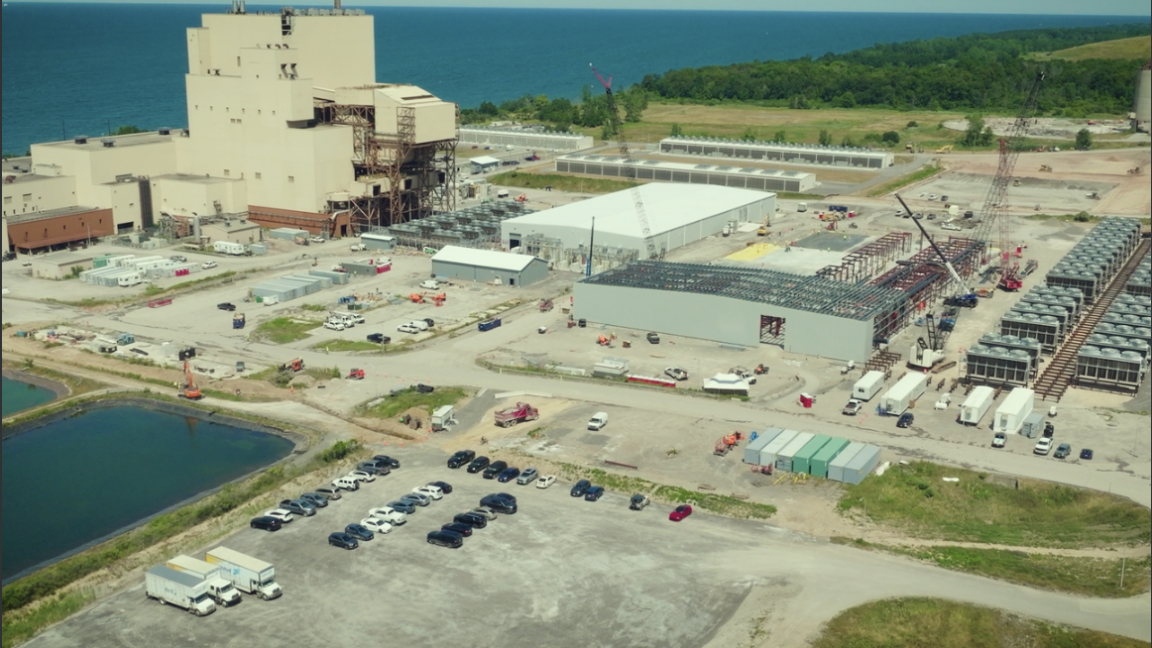
Fire exposes safety gaps at a complex AI data center project

A fire at the unfinished Lake Mariner data center in Somerset, New York, in early June highlighted uncertainty over emergency preparedness at the site. Firefighters from the Barker Fire Department reportedly found no functioning alarm or suppression system, while three hydrants were unusable. Safety documents that responders are legally entitled to access were also reportedly destroyed in the fire.

MarkTechPost

IFM launches six open K2 Horizon models from 0.9B to 375B

The Institute of Foundation Models (IFM), a frontier lab launched by MBZUAI in May 2025, has released K2 Horizon, a family of six models ranging from 0.9B to 375B-A23B parameters. The release includes the pre-training corpus, intermediate checkpoints, training code, configurations and detailed logs. IFM describes it as the largest fully open-source AI model launch to date. All models are available under Apache 2.0, with FP8 and GGUF versions, and support for vLLM, SGLang and Ollama on NVIDIA, AMD and Cerebras hardware.

The Verge

Two US publishers sue OpenAI and Microsoft over alleged copyright infringement

The Seattle Times and Newsday have sued OpenAI and Microsoft, alleging that the companies infringed their copyrights. The publishers say OpenAI used journalism from their publications to train its artificial intelligence models without permission. They also allege that the systems frequently reproduce passages from their reporting when responding to users’ queries.

MarkTechPost

H Company Releases Single-Tower NeoMME Multimodal Encoders

H Company has released NeoMME, a family of 260M and 800M bidirectional multimodal encoders designed for visual document retrieval. The models use one Transformer for multilingual text tokens and raw 32×32 RGB image patches, without a separately pretrained vision tower or a causal decoder. Both support a 16,384-token context and were trained from random initialization.

TechCrunch

Authors challenge publisher and agent claims on Anthropic settlement

Authors awaiting payments from Anthropic’s $1.5 billion copyright settlement say publishers and literary agencies are claiming money they may not be entitled to receive. The settlement covers nearly 500,000 titles and pays $3,000 for each pirated work. For books still in print through a traditional publisher, the payment is divided equally between author and publisher. Authors should receive the full amount for self-published books or titles whose rights had reverted after going out of print.

MarkTechPost

AI models rank experiments before costly training runs

Researchers from Meta FAIR, the University of Oxford and University College London have introduced AI Research Preference Models (RPMs), designed to choose which machine-learning experiments an AI research agent should execute. The system ranks untested candidates rather than predicting their eventual scores, because the team found language models unreliable at forecasting metrics and execution outcomes.