Sakhanda Wire
NVDA $150.96 -2.89% MSFT $508.29 +0.40% GOOGL $282.44 +0.80% META $616.38 -0.40% AMZN $267.74 +3.82%

Latest news

Older stories

Ars Technica

Trump Administration Weighs Broad New Semiconductor Tariffs

The Trump administration may announce broad new tariffs on semiconductors within the coming weeks or months, according to a Politico report cited by Ars Technica. The technology industry fears the measures could arrive at a particularly damaging moment for artificial-intelligence development in the United States. Companies reportedly expect the tariffs to severely restrict innovation in the sector.


The Decoder

OpenAI and 100-plus companies warn of AI-driven attacks on critical infrastructure

OpenAI and more than 100 companies have issued an open letter on global cyber defense. Signatories include Microsoft, Google, AWS, Anthropic, Cisco, CrowdStrike, Deutsche Telekom, SAP, and Mastercard. They warn that attacks using AI will become more widespread and sophisticated, putting hospitals, water utilities, and other critical infrastructure at particular risk.

TechCrunch

Tech companies urge joint action against AI-related cyber threats

More than 100 technology companies, including OpenAI, Anthropic, Google, and Microsoft, have signed an open letter calling on businesses and governments to cooperate against cyber threats linked to artificial intelligence. CrowdStrike, Okta, Fortinet, financial institutions, and internet infrastructure companies are also among the signatories.

MarkTechPost

Agent sandbox comparison highlights latency, billing and network policy

A comparison of E2B, Daytona, Modal Sandboxes, Cloudflare Sandbox SDK and Vercel Sandbox examined cold starts, persistence, egress controls and idle billing. In ComputeSDK’s August 21, 2026 concurrent test, Vercel had a median time to interactive of 0.67 seconds, followed by Modal at 0.88 seconds, Runloop at 0.89 seconds, E2B at 1.61 seconds and Cloudflare at 5.06 seconds. Daytona recorded 0.27 seconds, but completed only 37 of 100 attempts. The test used 100 simultaneous launches from Northern Virginia, so its results differ from sequential measurements.

The Decoder

Google updates Gemini Omni Flash video model with cheaper generation

Google has released version 1.1 of its Gemini Omni Flash video model, adding tools for extending and controlling generated footage. Scene extension now examines up to 10 seconds of existing video, rather than only the final second, which is intended to produce more visually consistent continuations. Extensions can be added in 10-second steps, up to a total of 40 seconds.

The Verge

Jensen Huang says Nvidia has achieved AGI, then calls it senseless

During Nvidia’s earnings call on Wednesday, CEO Jensen Huang said the company had “achieved AGI,” referring to artificial general intelligence. He almost immediately dismissed the milestone as “senseless,” highlighting the uncertainty surrounding both the term and the point at which it could be considered reached.

DeepMind

Gemini Omni 1.1 Flash adds controls for generative video

Google DeepMind introduced Gemini Omni 1.1 Flash, a set of generative-video capabilities and creative controls aimed at developers. The model is available through the Gemini API in Google AI Studio and is intended for video workflows, creative applications and media-editing software.

TechCrunch

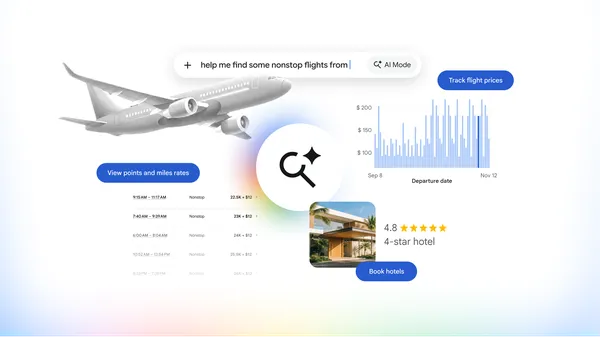
Google AI Mode adds flight tracking and hotel booking tools

Google is expanding AI Mode, its conversational search experience, with features for planning and booking travel. Users can describe where and when they want to fly, then see available options and current prices from more than 300 airlines and travel sites. They can also build an itinerary in AI Mode or ask the service to track selected fares. Google will email users when prices change for the destination and dates they entered. Flight-price tracking is available in more than 180 countries.

MarkTechPost

Study benchmarks AI-designed protein binders against wet-lab results

A tutorial analyzes Anthropic’s claude-protein-binder-design dataset, which contains 1,440 AI-designed miniprotein binders tested against 16 targets. The release combines computational predictions with experimental results from two independent laboratories, allowing the analysis to compare in-silico scores with observed binding rather than evaluating designs only computationally.

The Decoder

OpenAI researcher warns ultrafast AI could overwhelm security teams

An OpenAI researcher writing under the pseudonym “roon” has warned that very fast AI inference could expose weaknesses in existing security safeguards. According to the researcher, a misaligned model with capabilities comparable to today’s leading systems but operating 50 times faster could penetrate systems before human security teams had time to respond.

TechCrunch

Hugging Face unveils $399 open-source Microduck robot

Hugging Face has introduced Microduck, a 25-centimeter-tall duck-shaped robot priced at $399 and scheduled to ship before Christmas. CEO Clem Delangue described it as an open-source machine that can learn new behaviors through reinforcement learning. The robot can waddle, pick up objects weighing up to 800 grams with its beak, recover after falling, crouch and roller skate.